
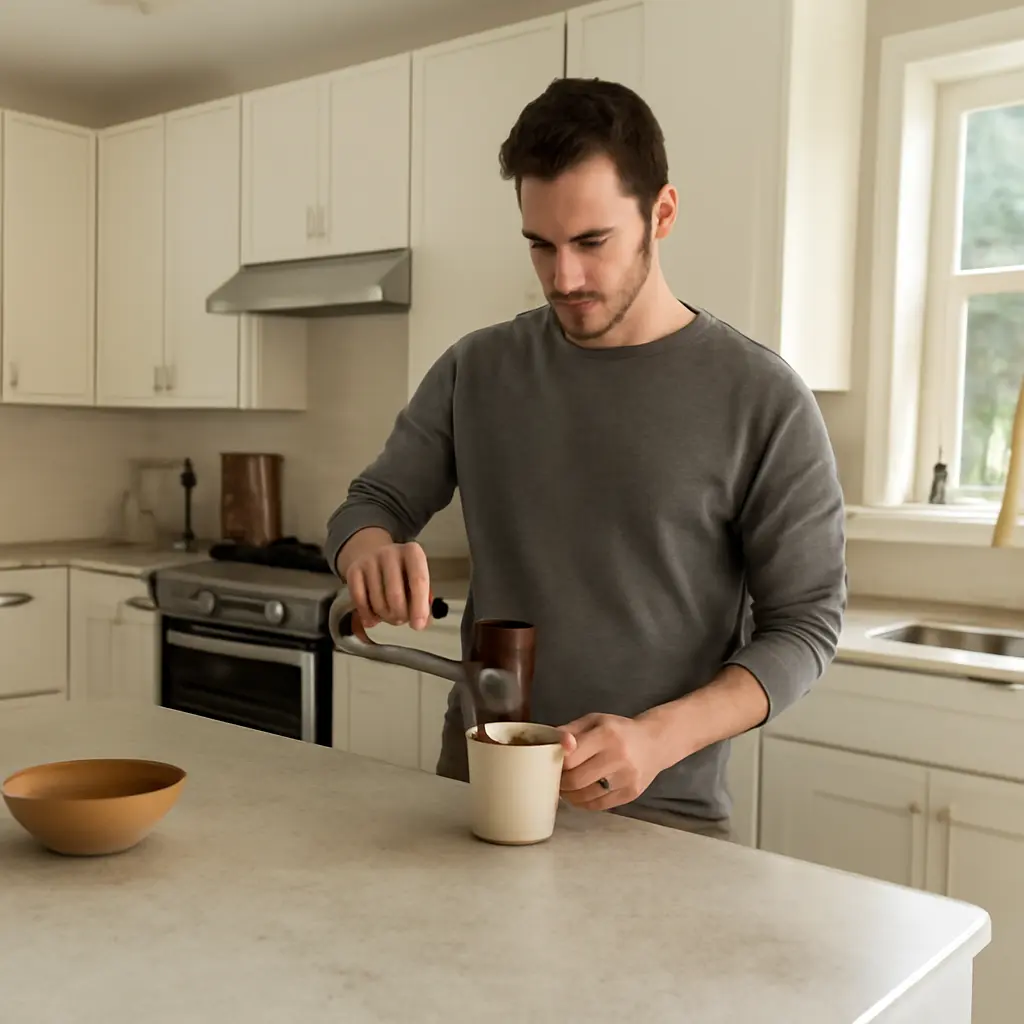
Cinnamon syrup is a sweetened flavoring made by infusing cinnamon into sugar syrup, commonly added to coffee, cocktails, and desserts. A daily café habit can cost far more than the syrup itself suggests: buying a flavored drink each workday can add up to hundreds or even more than a thousand dollars a year, depending on the drink’s price and how often you buy it. Making cinnamon syrup at home usually costs only a few dollars per batch, but savings depend on what the syrup replaces, how much you use, and whether you account for the coffee and other ingredients. Here’s how to estimate the real cost, compare café and homemade options, and enjoy the flavor without letting a small routine quietly inflate your budget.
Cinnamon syrup habit costs: the per-drink calculation
The cost of a cinnamon-syrup habit is the total spending attributable to buying or making drinks flavored with cinnamon syrup over a set period. There is no universal price for a “cinnamon syrup habit”: café prices, serving sizes, syrup pumps, and purchase frequency vary. The clearest method is to calculate the cost per drink, multiply it by how often you buy one, then compare that total with a realistic homemade alternative.
For example, a $6 drink bought five days a week costs about $30 per week. At 50 workweeks, that is $1,500 a year. This is the cost of the whole drink, not the syrup alone; if you would buy coffee anyway, count only the added cost of choosing the flavored version. The distinction matters: the syrup may be a modest part of the bill, while the café purchase, convenience, and add-ons drive most of the expense.
Daily café drinks
A daily café drink is a recurring purchase, so small price differences compound. At $5 per drink, five purchases a week for 50 weeks equal $1,250 annually. At $7, the same pattern reaches $1,750. These are arithmetic examples, not national price averages; use your own receipts and actual buying schedule for a dependable estimate.
The syrup’s incremental cost
The incremental cost is the extra amount paid for cinnamon flavor compared with the drink you would otherwise order. If a café charges an add-on fee, use that fee. If there is no separate charge, compare the flavored drink’s price with a similar unflavored drink. This avoids treating the full price of a latte or coffee as a syrup expense when the base drink is part of your usual spending.
A practical cost formula
Use this simple comparison:
- Annual café cost = average drink price × purchases per week × weeks per year.
- Annual homemade cost = ingredients used per drink × drinks made per year, plus any equipment or extra ingredients purchased specifically for the habit.
- Potential savings = café cost avoided − homemade cost.
This calculation leads to the next question: what does a homemade batch actually cost, and how much syrup does it make?
Homemade cinnamon syrup costs and ingredients
Homemade cinnamon syrup is generally a mixture of sugar and water infused with cinnamon. A common approach uses roughly equal amounts of sugar and water, warmed until the sugar dissolves, with cinnamon sticks or ground cinnamon added for flavor. The exact yield and flavor depend on the recipe, so compare the price of ingredients with the number of servings you actually pour rather than relying on a generic “cost per batch.”
The U.S. Department of Agriculture’s FoodData Central provides food composition data, but ingredient prices are local and change over time. For an accurate household estimate, use your grocery receipt and measure how many tablespoons go into each drink. A batch that costs $2 and yields 16 one-tablespoon servings works out to 12.5 cents per serving before accounting for waste or storage.
Sugar, water, and cinnamon
Sugar and water are inexpensive staples for many households, while cinnamon contributes most of the distinctive flavor. Whole cinnamon sticks can be steeped and removed; ground cinnamon is convenient but may leave sediment. The price difference between forms depends on package size and brand, so compare unit prices at the store rather than assuming one is always cheaper.
Cost per serving and batch yield
A serving-cost estimate is only useful if the serving size matches your habits. If a batch costs $2 and makes 16 servings, each serving costs about 13 cents. If you use two servings per drink, the syrup costs about 25 cents per drink. Add the cost of coffee, milk, and any toppings when comparing homemade drinks with café purchases; do not compare syrup alone with a complete beverage.
Food safety and storage
Homemade syrup contains water and should be handled as a perishable food. Store it in a clean, covered container in the refrigerator, label it with the preparation date, and discard it if its appearance, smell, or texture changes. The U.S. Department of Agriculture’s general food-safety guidance emphasizes prompt refrigeration of perishable foods; recipes and storage life differ, so follow a tested recipe’s specific instructions rather than assuming homemade syrup keeps indefinitely.
Café, homemade, and ready-made syrup comparisons
Cinnamon-flavored drinks can be purchased at cafés, made at home with scratch syrup, or prepared with a commercially bottled product. Each option trades money for time, convenience, consistency, and control. A fair comparison includes the full drink, the amount of syrup used, and the likelihood that ingredients will go unused.
Café drinks: convenience at a recurring premium
A café drink bundles preparation, equipment, service, and a ready-to-go beverage. That convenience can be worthwhile, but frequent purchases make the annual total significant. The Bureau of Labor Statistics’ Consumer Expenditure Surveys track household spending across categories, including food away from home; the data offer context for dining expenses but do not isolate cinnamon syrup or establish what an individual should spend.
Scratch-made syrup: lower ingredient cost, more effort
Making syrup at home can reduce the cost of flavoring a drink, particularly when you already own the basic kitchen equipment and use the batch before it spoils. The trade-offs are preparation time, cleanup, and the need to store it safely. It may not save money if you buy specialty ingredients that sit unused or make more syrup than you can finish.
Bottled syrup: convenience between café and homemade
Commercial cinnamon syrup reduces preparation time and may offer a consistent flavor, but its value depends on bottle price, serving size, and how quickly you use it. Divide the bottle’s price by the number of servings stated on its label—or by the servings you actually get—to estimate cost per drink. Check the ingredient and nutrition labels as well, since products differ in sweetness and serving size.
Sugar, calories, and the value of a flavored drink
Cinnamon syrup is typically a source of added sugar, so its financial cost is not the only consideration. The amount in a drink depends on the recipe, the product, and the number of pumps or spoonfuls used. The U.S. Food and Drug Administration advises that the Daily Value for added sugars is 50 grams per day on a 2,000-calorie diet; this is a general reference value, not an individual target. Nutrition labels and café information can help you assess a particular drink.
Added sugar varies by serving
A syrup serving’s sugar content is not fixed across brands or recipes. Homemade syrup’s concentration depends on the sugar-to-water ratio, while café recipes may use different pump sizes and formulas. Check the nutrition information when available, or measure your homemade portion. Reducing the amount gradually can preserve some cinnamon flavor while lowering both the amount of syrup used and the per-drink cost.
Cinnamon flavor without automatically adding more syrup
Cinnamon powder, a cinnamon stick used during brewing, or unsweetened cinnamon-infused coffee can provide aroma without the same syrup-based sweetness. These options are not identical to a sweetened café drink, but they can suit people who want the spice flavor with less added sugar or expense. Adjust gradually and taste before adding sweetener.
How to reduce the cost without giving up cinnamon
Reducing spending does not require eliminating the drink. A small change in purchase frequency, serving size, or preparation method can make a measurable difference. The best strategy is one you can sustain and that genuinely replaces a more expensive purchase.
Set a café frequency and track the result
Choose a realistic limit, such as buying the drink twice a week instead of five times. At $6 per drink and 50 weeks per year, reducing purchases from five to two weekly would avoid $900 in annual café spending before accounting for home ingredients. Record purchases for a month to check whether the plan matches your actual behavior.
Make only the quantity you will use
A smaller batch can reduce waste and make it easier to keep syrup fresh. Measure the amount used per drink, calculate the batch yield, and prepare only what you expect to consume within the recipe’s recommended storage period. This is especially useful if cinnamon drinks are a seasonal or occasional treat.
Compare actual costs, not assumed savings
Keep receipts for café drinks and ingredients, then compare the cost per serving after a few weeks. Include milk, coffee, disposable cups, and any equipment bought specifically for home preparation. If you still visit the café just as often and add homemade syrup purchases on top, the change may increase rather than reduce spending.
Conclusion: make the cinnamon habit work for your budget
A cinnamon syrup habit can become expensive primarily because of repeated café purchases, not because cinnamon syrup itself is necessarily costly. Calculate the annual price of your drinks, separate the syrup’s incremental cost from the full beverage price, and compare café, scratch-made, and bottled options using your own serving sizes and receipts. Keep sugar content and safe storage in mind, and choose a change—such as fewer café visits, smaller portions, or a carefully sized homemade batch—that you can maintain. Track your spending for a month, then adjust based on the real numbers rather than estimates.
Sources: U.S. Bureau of Labor Statistics, Consumer Expenditure Surveys, https://www.bls.gov/cex/; U.S. Department of Agriculture, FoodData Central, https://fdc.nal.usda.gov/; U.S. Department of Agriculture, Food Safety and Inspection Service, Refrigeration and Food Safety, https://www.fsis.usda.gov/food-safety/safe-food-handling-and-preparation/food-safety-basics/refrigeration; U.S. Food and Drug Administration, Added Sugars on the Nutrition Facts Label, https://www.fda.gov/food/nutrition-facts-label/added-sugars-nutrition-facts-label