
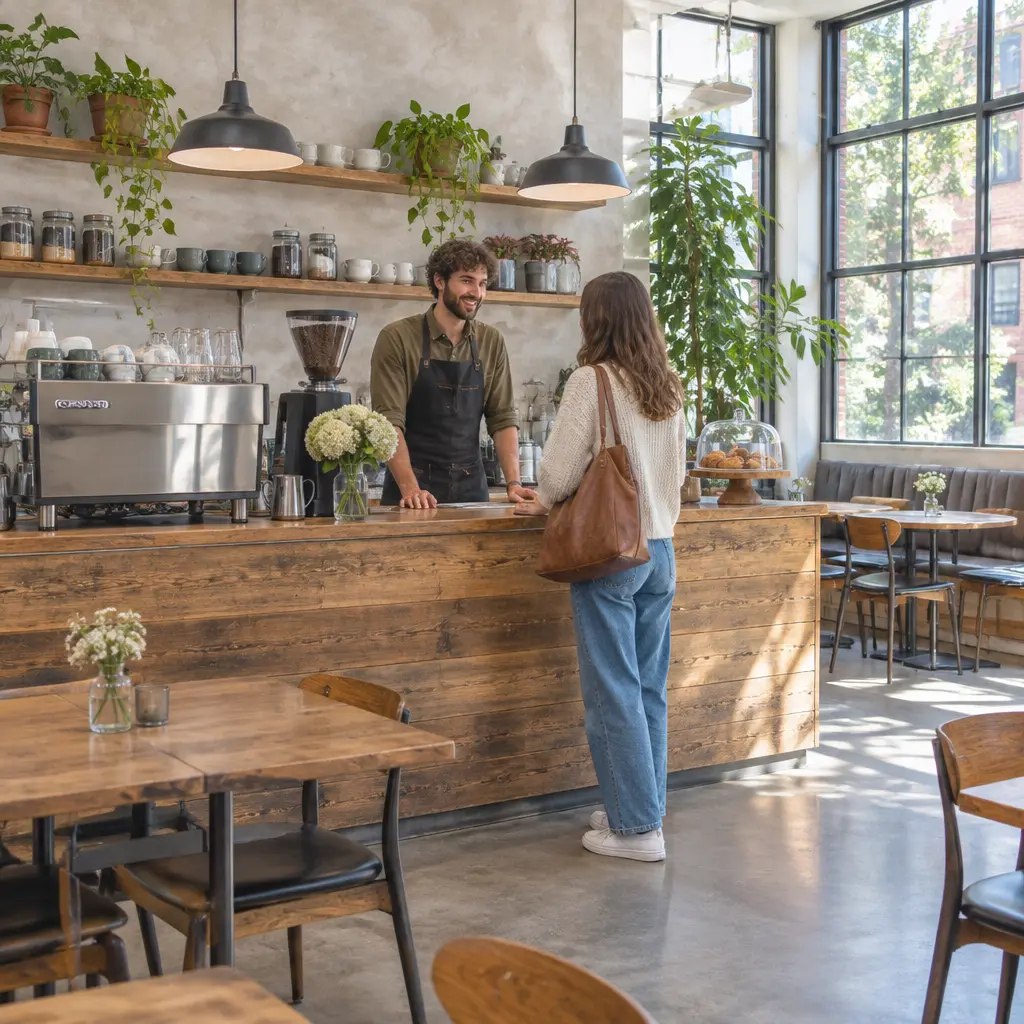
Coffee shop hospitality is the combination of attentive service, a welcoming environment, and reliable product quality that makes guests want to return. Turning visitors into regulars depends on more than serving good coffee: research on customer experience and restaurant behavior points to the value of consistent service, personal recognition, convenience, and trust. This guide explains how hospitality habits shape loyalty, how staff can personalize interactions without intruding, how operational consistency supports a welcoming experience, and how shops can measure whether their efforts are working.
Build Customer Loyalty Through Coffee Shop Hospitality
Customer loyalty is a guest’s continuing preference for a business, expressed through repeat visits, recommendations, or both. In the coffee shop context, it grows when customers repeatedly receive a product and experience that meet their expectations. The National Coffee Association’s 2024 National Coffee Data Trends report found that 67% of American adults had coffee in the past day, underscoring how often coffee can be part of everyday routines. A shop that earns a place in that routine has an opportunity to turn a single transaction into a lasting relationship.
Hospitality is not simply friendliness. It is the practical work of noticing what a guest needs, communicating clearly, resolving problems respectfully, and delivering dependable service. The American Customer Satisfaction Index (ACSI) measures restaurant experience across factors such as service, food quality, and value; its restaurant findings reinforce that customers judge the whole experience, not just the item they order. For coffee shops, the relevant forms of loyalty include habitual visits, preference for a particular shop or barista, participation in a rewards program, and recommendations to others.
Consistency makes a shop dependable
Service consistency means that guests can reasonably expect the same standards of drink quality, cleanliness, accuracy, and courtesy across visits and shifts. It does not mean that every interaction must sound scripted; it means the essential promises of the shop are reliably kept. A regular who orders an oat-milk cappuccino should not have to worry that the drink will be made differently each time or that the team will overlook an allergy-related request.
Consistency is supported by clear recipes, calibrated equipment, organized workstations, and shared service expectations. The Specialty Coffee Association’s brewing resources emphasize controlled variables such as coffee dose, water, grind, and extraction. Those technical details matter to hospitality because a well-made drink is part of the welcome. When a shop is busy, a steady process also helps staff avoid preventable errors and explain delays with confidence.
Recognition creates a sense of belonging
Recognition is the appropriate use of what a team has learned about returning guests—for example, remembering a preferred name, usual drink, or seating preference. It can make service feel personal, but it should be offered naturally and with respect for privacy. A simple “Would you like your usual?” is helpful when the customer has invited that familiarity; guessing personal details or insisting on a conversation can feel intrusive.
Research by the Harvard Business Review on customer experience has described personalization as a way to make interactions more relevant, while also emphasizing the importance of using customer information responsibly. In a small shop, recognition may come from staff memory rather than a digital profile. In either case, the goal is not to demonstrate how much the business knows; it is to reduce friction and help guests feel comfortable.
Use Welcoming Service Habits to Strengthen Coffee Shop Hospitality
Once a shop has established dependable basics, everyday service habits can make the experience warmer and more accessible. Welcoming service is a set of observable actions: acknowledging arrivals, listening before responding, explaining choices clearly, and treating people with equal respect. These habits support a range of guest needs, from a quick takeaway order to a first-time visitor who does not know the menu.
Greet guests promptly and read the moment
A prompt acknowledgment lets guests know they have been seen, even when the team cannot serve them immediately. It may be a greeting, a brief nod, or a clear statement such as, “We’ll be with you in just a moment.” This small habit reduces uncertainty during a queue and is especially useful when one employee is preparing drinks while another takes orders.
Good hospitality also means adjusting to the guest’s signals. Someone studying with headphones may prefer a quiet transaction, while a visitor studying the menu may welcome a short explanation. Staff can offer help without pressure: “Let me know if you’d like a recommendation.” This approach preserves the guest’s choice while making assistance easy to accept.
Listen actively and make recommendations useful
Active listening means giving attention to the guest’s request, confirming important details, and responding to what they actually said. For an unfamiliar menu, useful questions include whether they prefer a sweeter or less sweet drink, a stronger coffee flavor, or a dairy-free option. Staff should describe products accurately and avoid making claims about ingredients or allergens unless they can verify them.
Recommendations work best when they reduce decision effort rather than increase it. Instead of listing every drink, a barista might offer two choices and explain the difference in plain language. This is particularly valuable for visitors who are new to specialty coffee. The National Restaurant Association’s research on restaurant trends regularly highlights the importance of experience and menu appeal; a clear, low-pressure recommendation can make both easier to appreciate.
Recover service failures with ownership and follow-through
Service recovery is the process of responding when something goes wrong, such as a missed modification, an incorrect order, or an unexpected wait. A strong response acknowledges the problem, apologizes without arguing, offers a practical fix, and checks that the guest is satisfied. Staff should be empowered to remake a drink or correct an order within clear limits, rather than forcing customers through a lengthy explanation.
The Institute of Customer Service’s research on customer experience has consistently treated complaint handling and resolution as important parts of trust. A mistake does not automatically end a relationship; an indifferent response can make it worse. For example, if a takeaway drink is made with the wrong milk, the team can promptly remake it, confirm the correct choice, and review the handoff process to prevent a repeat.
Design the Coffee Shop Experience for Comfort and Access
Hospitality extends beyond the counter. The physical environment, ordering process, and accessibility of the space influence whether guests can comfortably use the shop. A welcoming environment supports different visit purposes: a short coffee break, a conversation, a remote-work session, or a quick pickup. These needs can coexist when the layout and service cues are clear.
Keep the space clean, legible, and comfortable
A comfortable shop is one where guests can understand how to enter, order, collect drinks, find seating, and dispose of waste. Clean tables and restrooms, visible menus, uncluttered pickup areas, and sensible queue flow help customers feel at ease. These details are especially important during peak periods, when unclear signage can create crowding and make the service feel more stressful than it needs to be.
The U.S. Access Board’s guidance on the Americans with Disabilities Act (ADA) describes accessibility requirements for public accommodations, including routes and facilities. Coffee shops should review applicable accessibility standards and local requirements, while also considering practical usability: reachable counters, clear pathways, readable menus, and seating options that accommodate different guests. Accessibility is not a special extra; it is part of making hospitality available to more people.
Offer clear choices for dine-in, takeaway, and digital ordering
Convenience means making it easy for guests to complete an order in the way that suits them. A clear distinction between the ordering queue and pickup point, accurate wait-time estimates, and visible options for takeaway or dine-in reduce confusion. If a shop offers mobile ordering, the collection process should be just as clear as the in-person one.
Digital ordering can save time, but it does not replace human service. Staff still need to handle substitutions, clarify unavailable items, and welcome customers collecting an order. The U.S. Census Bureau’s retail data show the continuing significance of e-commerce across retail, while consumer behavior varies by category and business. For a neighborhood café, the practical lesson is to choose technology that solves a real customer problem and to keep a personal service option available.
Make hospitality inclusive and culturally aware
Inclusive hospitality treats guests fairly and avoids assumptions about their language, budget, dietary needs, ability, or familiarity with coffee culture. Staff can use plain language, explain unfamiliar terms, make prices and sizes easy to compare, and ask neutral questions about modifications. When possible, menus should clearly identify common ingredients and provide a reliable way to ask about allergens.
The U.S. Department of Justice explains that businesses open to the public have obligations under the ADA. Beyond legal compliance, inclusive habits can be built into training: do not interrupt a guest who uses an assistive communication method, offer help without taking control, and ensure that service policies are applied consistently. A shop earns trust when different customers can participate without having to justify their needs.
Measure Whether Coffee Shop Hospitality Builds Repeat Visits
Hospitality can be evaluated using both business outcomes and direct feedback. Repeat purchase rate, visit frequency, average transaction value, rewards-program participation, and customer retention can indicate whether guests are returning. These metrics should be interpreted together: a rise in average spending, for example, does not necessarily mean more customers feel welcome.
Track a small set of useful indicators
A practical measurement plan starts with a baseline and a few indicators that match the shop’s goals. A manager might track repeat visits among loyalty-program members, order accuracy, average wait time during peak periods, and the number of service issues resolved on the first interaction. Short customer surveys can ask whether guests felt welcomed, received the correct order, and would recommend the shop.
The ACSI uses customer surveys to assess perceived quality, value, and satisfaction across industries. A café does not need to reproduce a large-scale index, but it can follow the same principle: ask specific questions, collect responses consistently, and review patterns rather than overreacting to one comment. Feedback should be voluntary, brief, and handled in a way that protects customer privacy.
Turn feedback into staff habits
Feedback is useful only when it leads to a clear action. If customers regularly report confusion at pickup, revise the signs or queue layout. If they mention inconsistent drinks, review recipes and equipment calibration. If guests feel rushed, examine staffing and service flow before telling employees simply to “be friendlier.” Good operations create the conditions in which hospitality can happen.
Use brief team check-ins to share what is working, practice service-recovery scenarios, and clarify who handles common issues. Training should cover product knowledge, food safety, respectful communication, accessibility, and escalation procedures. Managers can recognize specific actions—such as explaining a delay clearly or catching an order mistake—so staff understand what good service looks like in practice.
Conclusion: Make Every Coffee Shop Visit Feel Dependable and Human
Coffee shop hospitality turns visitors into regulars when it combines consistent drinks, sincere recognition, attentive listening, effective service recovery, and a comfortable, accessible environment. The National Coffee Association’s finding that two-thirds of American adults drank coffee in the past day illustrates the scale of the everyday habit a café can serve. But repeat business is earned one interaction at a time: guests return when the experience is dependable and when they feel respected rather than processed.
Start by choosing a few habits to improve this month: acknowledge every arrival, confirm order details, make recovery quick and respectful, and ask guests for focused feedback. Then review the results with your team and adjust the systems behind the service. Further reading from the National Coffee Association, the Specialty Coffee Association, the ACSI, and the U.S. Access Board can help owners connect customer experience, coffee quality, and accessibility to daily practice.
Sources: National Coffee Association, 2024 National Coffee Data Trends, https://www.ncausa.org/Research-Trends/Market-Research/NCDT; American Customer Satisfaction Index, Restaurants Study, https://www.theacsi.org/industries/acsi-restaurant-study/; Specialty Coffee Association, Coffee Standards and Resources, https://sca.coffee/research/coffee-standards; Harvard Business Review, The Value of Customer Experience, https://hbr.org/2014/08/the-value-of-customer-experience-quantified; Institute of Customer Service, UK Customer Satisfaction Index, https://www.instituteofcustomerservice.com/research-insight/ukcsi/; U.S. Access Board, Americans with Disabilities Act Accessibility Standards, https://www.access-board.gov/ada/; U.S. Department of Justice, ADA Requirements: Effective Communication, https://www.ada.gov/resources/effective-communication/; U.S. Census Bureau, Quarterly Retail E-Commerce Sales, https://www.census.gov/retail/mrts/www/data/pdf/ec_current.pdf